If your property has lead plumbing, it is possible that there is lead in your drinking water.
The amount of lead which dissolves into drinking water can depend on:
Wherever lead piping is present in the supply pipe or internally in the property, there is a risk that lead may dissolve into the drinking water.
If your water has not been tested, can you take precautions?
If your water has been tested and is still above 10µg per litre (10 microgrammes per litre) after flushing what can you do?
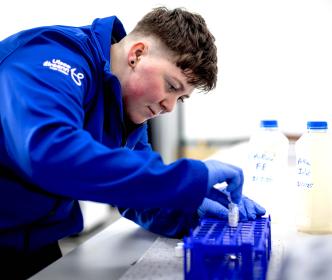
If you want to test your water for lead:
It is important to understand that:
A single test for lead in water may not provide a full picture of the lead levels in the drinking water at your property. This is because the amount of lead in water can be influenced by a number of factors, including the length of a pipe, the length of time water has been standing in a pipe, the temperature and the chemical nature of the water. This means that samples taken from the same tap at different times of the day or at different temperatures can give different results.
The Irish National Accreditation Board (INAB) assesses and certifies laboratories. It lists all accredited laboratories on its website and you can check with it for suitable laboratories in your area. It is a good idea to phone more than one laboratory as prices can vary. Please view their website for more information.
For more information and advice on the health effects of lead in drinking water, please visit the FAQ section of the HSE website.
Drinking Water, as produced by Irish Water, is free from lead.
While there are currently no known lead water mains in Ireland - internal plumbing, service connection pipes and shared service connections may contain lead pipework. If your property was built up to and including the 1970s it is likely that the pipework within the property boundary contains lead. It is estimated that there are 180,000 homes in Ireland, together with public buildings, schools, medical centres and other buildings over 40 years old, where lead was the normal plumbing material.
Therefore it is possible that there is lead in your drinking water. Lead pipework can dissolve low concentrations of lead into drinking water as it passes through.
Irish Water is responsible for the pipes under the road or paths to the outer edge of the boundary of the property. This is referred to as the public side connection. The property owner is responsible for the pipe from the outer edge of the property boundary to the building and all the inside plumbing. This is known as the private side connection.
There are other types of connections (eg where the connection is shared or comes through the back garden) but these are not common.
Yes. The Department of Housing, Planning, Community and Local Government has established a grant scheme that is available to homeowners to assist with the cost of replacing pipework containing lead in properties. The grant scheme is administered by Local Authorities. For more information on how to apply for a lead replacement grant scheme, please visit the the Department of Housing, Planning, Community and Local Government website.
Irish Water has included a customer opt-in step by step guide as part of the Lead in Drinking Water Mitigation Plan. As part of this scheme Irish Water commit to replacement of the public side lead service when the customer has replaced the private side lead service.
The application form can be found here.
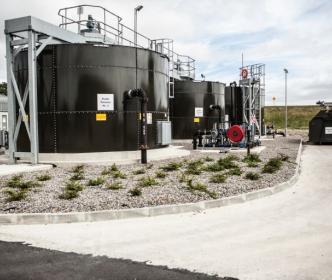
Drinking water must undergo a complex treatment process to ensure it is clean and safe to use. Depending on the source type, the treatment process can involve the addition of chemicals to the water. Adjustment of pH levels, in conjunction with orthophosphate treatment, is a corrective water treatment used to reduce the corrosion of lead pipes and the subsequent dissolving of lead into drinking water, with the aim of protecting public health.
The United States Environmental Protective Agency (USEPA) has identified orthophosphate treatment as the most effective method (apart from replacing any lead pipework and fittings) for reducing the presence of lead in drinking water.
Note: Orthophosphate treatment involves adding orthophosphate to drinking water.
Orthophosphate added to drinking water is in the form of an additive called phosphoric acid. This is a clear, odourless liquid and is entirely safe for human consumption. Phosphoric acid as a food additive (E338) is approved for use in food products, such as dairy, cereals, soft drinks, meat and cheese products. There is 500 times more phosphorus in a glass of milk than in a glass of water treated with orthophosphate.
The average person consumes between 1,000 and 1,500 milligrams of phosphorus every day as part of a normal diet. The typical concentration of phosphorus ingested from drinking 3 litres of water per day that has been treated with food grade phosphoric acid at 1.5 mg/l Phosphorus, would only be 4.5 milligrams.
Yes, Orthophosphate is a widely used 'corrosion inhibitor', added to treated drinking water in the UK, mainland Europe, USA, and Canada to reduce lead levels in drinking water.
In addition:
For reference:
Report of the Commission on Dietary Food Additive Intake in the European Union (2001)
Irish Water expects that it will take between 6 to 24 months of orthophosphate treatment before a substantial reduction in lead levels occurs. This is due to the time it typically takes for the protective coating to form inside the lead pipes and fittings, and to develop fully throughout the entire water distribution system.
Under the Irish Water Lead Mitigation Plan, Irish Water proposes to implement orthophosphate treatment where it is technically, economically and environmentally viable to do so. Irish Water is proposing to investigate the roll-out of orthophosphate treatment at up to 400 water treatment plants, subject to a site-specific assessment at each plant.
A site-specific assessment will also be carried out on each water supply zone, including Environmental Assessment Methodology (EAM) and Appropriate Assessment (AA).
Yes. This is not a new method for reducing lead levels; in fact it has been used successfully in many countries for several years. The HSE has recognised that there is no health concern linked to the addition of orthophosphate to drinking water following extensive use across the UK (for over a decade) and in many other major metropolitan settings, such as New York, where reduced lead levels in drinking water had resulted.
Any additives used as part of the corrective water treatment process for the protection of public health, will be required to be on the UK Drinking Water Inspectorate ‘List of Approved Products for use in Public Water Supply in the United Kingdom’. The products in this list have been assessed for safety, for use in water supplies.
Irish Water recognises that the most effective long-term strategy is to remove all lead pipes and fittings from the entire drinking water supply network. This is also the recommendation of the World Health Organisation ( WHO ). However as the majority of lead pipes and fittings are located within private property (i.e. inside the property boundary), the responsibility to replace this lies with the customer (property owner), and not Irish Water.
The Irish Water Lead Mitigation Plan, and the Government’s National Lead Plan, highlight the need for collective action, involving property owners and a number of public and private stakeholders over many years to reduce exposure of people to lead in drinking water.
International experience has shown that proactive replacement of public side lead service connections by water companies does not achieve significant benefits unless the customer replaces privately owned lead supply pipes at the same time.
In situations where any public-side lead is replaced by Irish Water, it is highly likely that lead levels in the drinking water will continue to be elevated unless and until any privately-owned lead supply pipes and fittings are replaced at the same time by the property owner.
If a property owner replaces the lead pipework on their property, Irish Water will also replace the pipework between the water main and the property boundary.
The Government has introduced a grant scheme to help homeowners with the cost of replacing lead pipes and fittings containing lead inside the boundary of their property. The grant scheme is administered by the Local Authorities.
For more information on the scheme, please visit the Department of Housing, Planning, Community and Local Government Website.
Irish Water will be testing water at randomly selected customer taps throughout the distribution network of each water supply zone to monitor the effectiveness of orthophosphate treatment and levels of lead present. Samples will be taken in the Water Supply Zone every two months after the commencement of orthophosphate treatment. If a Lead exceedance is detected during monitoring, you will be informed in writing of the result. These results are also reported to the HSE and the EPA.
Irish Water has undertaken laboratory testing to assist in quantifying the optimum treatment dose and to ensure that phosphate levels are kept as low as possible. Additional phosphorus has the potential to impact receiving waters through nutrient enrichment and the increase of algal growth in slow moving fresh water. Irish Water, in consultation with the EPA and other environmental stakeholders, is in the process of developing a comprehensive environmental assessment methodology to assess any potential impacts and ensure that the necessary actions are undertaken to protect the natural environment. Wastewater treatment plants have treatment stages, which reduce the levels of phosphate being discharged to the receiving waters. Irish Water will closely study the potential environmental impacts from orthophosphate treatment on the receiving waters for each water supply zone.
When investigating the feasibility of orthophosphate as an interim treatment, a site specific environmental assessment will be carried out on each water supply zone, including Environmental Assessment Methodology (EAM) and Appropriate Assessment (AA).
Irish Water will prepare a programme for decommissioning orthophosphate treatment from the water supply when Irish Water has completed public side lead service connection replacement, and the annual sampling programme indicates that the risk to households has reduced to compliant levels. Our expectation, based on the experience in other countries, is that orthophosphate treatment will continue as a mitigation measure for as long as lead pipes remain in properties.
Irish Water has included a Customer Opt-In Step By Step Guide as part of the Lead in Drinking Water Mitigation Plan. As part of this scheme Irish Water commit to replacement of the public side lead service when the customer has replaced the private side lead service.