Limerick Wastewater Treatment Plant Upgrade and Regional Bioresource Centre
Uisce Éireann is progressing plans to upgrade the Limerick Wastewater Treatment Plant
Project Background
Limerick Wastewater Treatment Plant has been providing service to the area since the early 2000s. Biosolids are the bioresource output from the process. Biosolids are the bioresource output from the process. Biogas is the other output. Information is in latest slides attached. The existing plant was last upgraded in 2017 and currently already treats sludge produced at the plant itself and imports from smaller plants in Limerick, Clare and Tipperary.
Uisce Éireann has identified that the Limerick Wastewater Treatment Plant is currently reaching capacity and an upgrade is required to ensure continued environmental compliance, and to support both the existing and future growth and development of Limerick City into the future.
The continuation of appropriate wastewater treatment will be vital to protect both human health and the local environment, as population grows and industry continues to expand in Limerick City.
Limerick Wastewater Treatment Plant has also been selected as the preferred location in the Southern Region for the development of a Regional Bioresource Centre, accepting sludge imports from smaller plants in Counties Limerick, Clare and Tipperary. This forms part of the National Wastewater Sludge Management Plan which aims to deliver a sustainable and standardised approach for wastewater sludge management.
About the project
Limerick Wastewater Treatment Plant upgrade project and Regional Bioresource Centre is cited as a Strategic Infrastructure Development under the Planning and Development Act (2000). A Strategic Infrastructure Development can generally be described as a development which is of strategic economic or social importance to the state or a region. Strategic Infrastructure Development applications are applications for planning permission directly to An Coimisiún Pleanála (previously known as An Bord Pleánala).
The Strategic Infrastructure Development application will be accompanied by an Environmental Impact Assessment Report. The application will be submitted with the relevant application documents.
Uisce Éireann is engaging with the local community and stakeholders regarding the proposed project through a non-statutory consultation process before the formal planning application is submitted to An Coimisiún Pleanála in the coming months.
Why is the project needed?
The wastewater treatment plant has a current capacity to serve approximately 130,000 population equivalent (PE) in Limerick City and surrounding areas. PE is the amount of biodegradable organic matter in wastewater that is equivalent to what one person would produce in a day. In order to support projected growth in the region and meet future demands of Limerick City and surrounding areas, the treatment capacity of the plant needs to be significantly increased to serve a future projected population equivalent (PE) of 285,000 over 10 years with provision for expansion to 325,000 PE. This essential project will also ensure compliance with environmental regulations and protect the Shannon, a designated Special Area of Conservation.
The Environmental Protection Agency defines PE as a measure of the organic biodegradable load, which is calculated based on the maximum average weekly load entering the treatment plant during a year (excluding unusual situations such as those due to heavy rain).
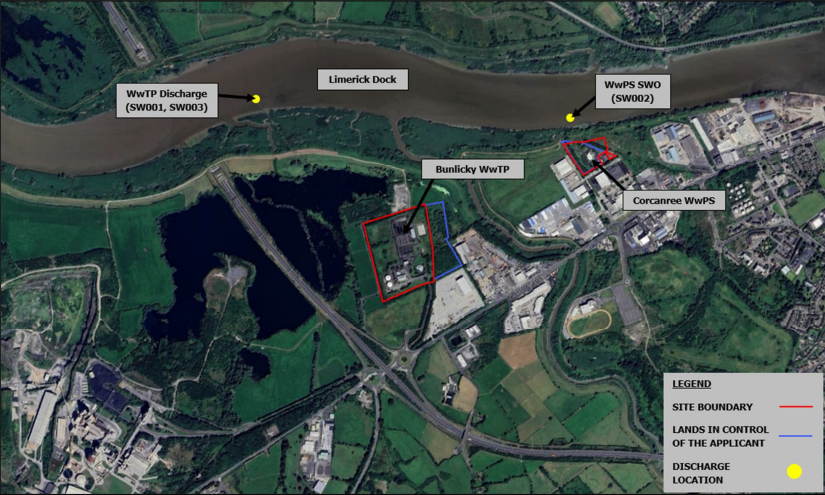
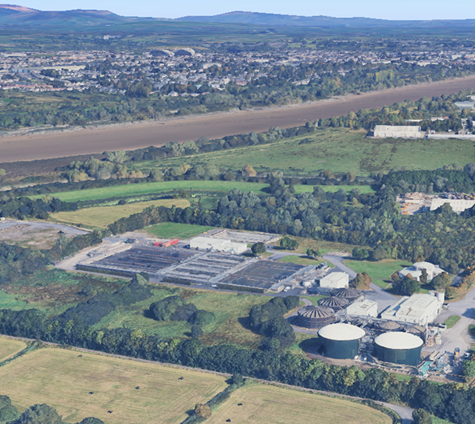
Figure 1-2: Limerick wastewater treatment plant
Proposed upgrades to the wastewater treatment plant include the following:
The Wastewater Treatment Plant capacity upgrade will caterfor 10-year growth projections, extending the existing wastewater treatment plant from 130,000PE to 285,000 PE. Key elements of this upgrade include:
- Construction of a new 157,000 PE inlet works and Aerobic granular sludge (AGS) process stream.
- Upgrade to the existing foul water pumps at Corcanree Main Lift Pumping Station to increase pumping capacity to the wastewater treatment plant.
- Diversion of a rising main from Corcanree Main Lift Pumping Station to the new process stream.
- Retaining existing Mungret pumping arrangement; and
- Retaining existing 1.1km outfall pipe to the Shannon Estuary
The proposed Regional Bioresource Centre will be designed to treat sludge including sludges from other, smaller wastewater treatment plants in County Limerick to the required Code of Good Practice standard for reuse of Biosolids in Agriculture, in alignment with the National WastewaterSludge Management Plan (NWSMP). Works requirements include:
- New dewatered sludge cake reception facility.
- New mechanical thickening system.
- New Thermal Hydrolysis Process (THP) with capacity of50 TDS/day.
- Refurbishment of existing digester feed tanks as pre-THPdewatering feed tanks.
- Upgrade mixing system and transfer pumps
- New odour control system.
- New dewatering and storage installations
- New/additional AD tank (optional).
- Biogas storage bell (optional).
- New/ additional Combined Heat and Power Engine(CHP).
- New digested sludge tank and dewatering system.
- New Class A biosolid storage silo
- New centrate return pumping station.
- Upgraded wash water system with added UV treatment.
The proposed stormwater storage tank is a large piece of infrastructure that must cater for the long-term 25-year expansion. Total storage volume for the long term projected 325,000 PE is calculated to be c. 20,000m3 in accordance with Urban Wastewater Treatment Directive (UWWTD) stormwater storage requirements. Works requirements include:
- Development of a hydraulic model to determine spill rates and final tank sizing.
- Acquisition of lands adjacent to Corcanree Main Lift Pumping Station
- Construction of a new 12,500m3 stormwater storage tank and associated pipework.
What are the benefits of this project?
- Modernise and enhance the Limerick Wastewater Treatment Plant to meet current and future needs.
- Safeguard public health and protect the integrity of the local environment.
- Protect and improve water quality and support the unique conservation habitats of the Shannon Estuary.
- Maintain compliance with all national and EU environmental standards into the future.
- Improve efficiency and reduce operating costs for sludge treatment.
- Transform wastewater sludge into a valuable, reusable bioresource.
- Generate renewable energy on-site to help power the facility and reduce its carbon footprint.
What's happening now
Uisce Éireann engaged with the local community and stakeholders regarding the proposed project through a non-statutory consultation process before the formal planning application is submitted to An Coimisiún Pleanála (previously known as An Bord Pleánala) in the coming months.
This consultation has now closed. All feedback received in response to this consultation has been recorded and will be considered by the project team. A summary of feedback received during this consultation process will be included in the Environmental Impact Assessment Report which will be submitted with the planning application to An Coimisiún Pleanála.
Next steps?
Uisce Éireann has engaged with the local community and stakeholders regarding the proposed project through a non-statutory consultation process which is now complete. A formal planning application will be submitted to An Coimisiún Pleanála (previously known as An Bord Pleánala) in the coming months.
Frequently Asked Questions
Uisce Éireann is upgrading Limerick Wastewater Treatment Plant (WWTP) to future-proof Limerick’s wastewater system, protect the environment, and support sustainable management of wastewater by-products.
- Wastewater Plant Upgrade: The plant will expand from 130,000 to 285,000 population equivalent, handling future domestic, commercial, and industrial wastewater safely.
- Stormwater Storage: A new stormwater tank will reduce overflows during heavy rainfall, preventing untreated water from entering the estuary.
- Regional Bioresource Centre: A central facility will treat sludges from Limerick, Clare, and Tipperary, producing safe, reusable biosolids and generating renewable energy on site.
1.1 Limerick Wastewater Treatment Plant Upgrade
Limerick is expected to grow significantly over the coming years, with national planning targets aiming for at least 50% population growth by 2040.
To support this growth and protect the local environment, Uisce Éireann is proposing to increase the treatment capacity of the Limerick Wastewater Treatment Plant from 130,000 to 285,000 population equivalent (PE). This upgrade will ensure the plant can safely and effectively manage future domestic, commercial, and industrial wastewater, while meeting strict environmental standards set by the EPA and the EU Urban Wastewater Treatment Directive.
1.2 Stormwater Storage
During heavy rainfall, large volumes of surface water enter the drainage system. The current stormwater storage tank at the plant is too small to handle this flow, which has resulted in frequent overflows into the Shannon Estuary. In 2023 alone, there were 138 significant stormwater spills, breaching both Uisce Éireann technical standards and EU wastewater regulations.
1.3 Regional Bioresource Centre
The Southwest Regional Bioresource Centre is needed to provide a modern, centralised facility for treating wastewater sludges from Limerick, Clare, and Tipperary. The centre will produce Class A biosolids that meet the Code of Good Practice for agricultural reuse, in line with Uisce Éireann’s National Wastewater Sludge Management Plan (NWSMP). By combining anaerobic digestion (AD) with heat treatment, the facility will safely treat both indigenous and imported sludges, while generating renewable biogas to produce electricity and heat for use on site, improving energy efficiency and sustainability.
- Future-proofs Limerick’s wastewater system for growth.
- Protects water quality and the environment, including the Shannon Estuary.
- Supports sustainable management of wastewater by-products while reducing operational costs and carbon footprint.
Limerick Wastewater Treatment Plant Upgrade
- Construction of a new 157,000 PE inlet works and Aerobic granular sludge (AGS) process stream.
- Upgrade existing foul water pumps at Corcanree MLPS to increase pumping capacity to the WWTP.
- Diversion of a rising main from Corcanree MLPS to the new process stream.
- Retain existing Mungret pumping arrangement.
- Retain existing 1.1km outfall pipe to the Shannon Estuary.
Stormwater Storage
- Development of a hydraulic model to determine spill rates and final tank sizing.
- Acquisition of lands adjacent to Corcanree MLPS.
- Construction of a new 12,500m3 stormwater storage tank and associated pipework.
Regional Bioresource Centre
- New dewatered sludge cake reception facility.
- New mechanical thickening system.
- New Thermal Hydrolysis Plant (THP).
- Refurbish existing digester feed tanks as pre-THP dewatering feed tanks.
- Upgrade mixing system and transfer pumps.
- New odour control system.
- New dewatering and storage installation
- New/additional Anaerobic Digestion tank (optional).
- Biogas storage bell (optional).
- New/ additional Combined Heat and Power Engine (CHP).
- New digested sludge tank.
- New digested sludge dewatering system.
- New export Class A Biosolid storage silo.
- New liquor return treatment plant.
- Upgraded wash water system with added UV treatment.
Limerick WWTP was identified as the most suitable site for the new Regional Bioresource Centre following detailed technical and environmental assessments, and public consultation by Uisce Éireann. The site offers several key advantages:
- Existing Infrastructure: Limerick already operates as Limerick’s main wastewater treatment facility, with established utilities, access roads, and treatment processes that can be integrated with the new centre.
- Strategic Location: Centrally located within the Southwest Region, Limerick provides efficient access for the collection and treatment of sludges from Limerick, Clare, Tipperary, and surrounding counties.
- Adequate Space and Capacity: The site has sufficient land and operational capacity to accommodate new infrastructure without significant disruption to ongoing treatment operations.
- Environmental Efficiency: Co-locating sludge treatment and wastewater operations reduces transport distances, energy use, and the overall environmental footprint.
- Sustainability Potential: The site can support renewable energy generation from the anaerobic digestion process, helping to power the facility and contribute to Uisce Éireann’s carbon reduction goals.
Uisce Éireann have commissioned an Environmental Impact Assessment Report (EIAR) and Natura Impact Statement (NIS) to address all issues of potential impact or concern. The mitigation measures contained within the EIAR will be strictly complied with to avoid adverse impacts for local residents. Further detail on the potential impacts and associated mitigation will be presented during the next non-statutory public consultation at the EIA Scoping stage of the project.
Construction works will be carefully managed through the implementation of the Construction Environmental Management Plan which will include spill control measures, good housekeeping measures and an Emergency Incident Response Plan amongst other measures that are designed to prevent impacts to the Shannon Estuary and associated ecosystems.
We all create wastewater in our everyday lives, through the water we use, for example when we flush the toilet, or the water that flows down our sink drains. Industry, hospitals, schools and offices also create wastewater.
Wastewater can contain a wide range of contaminants, some of which can be broken down in the environment easily while others not so easily. Wastewater must therefore be treated to ensure that it is not a threat to public health or the environment when discharged to the receiving environment. Wastewater is collected and transported via underground sewers / pipelines to be treated at a wastewater treatment plant (WWTP).
Untreated wastewater poses a threat to public health and the environment. Treatment is therefore carried out in order to produce an environmentally safe liquid that is suitable for disposal to our aquatic environment, such as rivers, lakes and seas.
Proper wastewater treatment systems are essential for sustaining modern living. Householders, businesses, industries, schools and hospitals all rely on a robust wastewater treatment system to maintain their daily activities.
The sewerage system transports wastewater via underground sewers / pipelines to a wastewater treatment plant where it is treated to strict standards under Environmental Protection Agency (EPA) licence and in compliance with EU and national water quality legislation, to a standard that is safe to be discharged to the environment.
At the treatment plant, contaminants are removed including fats, oils and greases along with biological matter such as bacteria and faecal matter. The resulting clean water is returned to watercourses, while the sludge is treated for agricultural use or to generate energy.
For more information on the wastewater treatment, check out our section From Drain to Sea.
A bioresource is a valuable product recovered from wastewater, most often in the form of biosolids produced from the treatment of sludge. During the treatment process, organic material in the sludge is stabilised using advanced techniques, such as anaerobic digestion and heat treatment, which removes harmful pathogens and contaminants.
The resulting Class A biosolids are:
- Safe and biologically stable
- Free from contaminants
- Suitable for reuse, often as a nutrient-rich fertiliser in agriculture
In addition to producing a useful product, the process also generates renewable energy (biogas) that can be used to power the treatment plant, making the system more sustainable and energy-efficient.
Odour is not generally an issue as odour controls are incorporated into the design of the wastewater treatment plants.
Yes, the project is considered Strategic Infrastructure Development (SID) under the Planning and Development Act (2000) and a planning application will be made directly to An Coimisiún Pleanála (previously known as An Bord Pleanála).
SID projects can generally be described as any development which is of strategic economic or social importance to the state or a region. It is also applied in works to wastewater treatment plants with a capacity greater than a population equivalent of 10,000.
The SID application for this project will include an Environmental Impact Assessment Report, Natura Impact Statement, as well as other relevant planning documents. Uisce Éireann will also be required to engage with Limerick City and County Council prior to the SID planning submission.
Uisce Éireann will be undertaking a non-statutory public consultation to provide local residents, businesses and any other stakeholders with information on the proposed development. The public consultation will run for a period of 4 weeks, from Monday 3rd November to Monday 1st December 2025.
We will be holding face-to-face public information events in the local area where members of the project team will be available to share information on the project.
Date: Thursday, 6 November 2025
Venue: Limerick Strand Hotel, Ennis Road, Stonetown, Limerick, Ireland, V94 03F2
Time: 2.00 – 8.00pm
Date: Tuesday, 11 November 2025
Venue: South Court Hotel, Raheen Roundabout, Limerick, Ireland, V94 E77X
Time: 2.00 – 8.00pm
Key information on the proposed project and consultation materials are available on our project website.
Website: www.water.ie/limerickwwtp
Have your say on the project by completing the online feedback survey via the project website or provide your feedback via e-mail to limerickwwtp@water.ie
Your views are important and will help shape the development of this critical project
Funding approval, EIA and planning permission processes are underway and will be completed by Q4 2027. The construction phase is estimated to be carried out over 4 years, between 2028 and 2032. See Project Roadmap diagram here.
*The project is indicative and subject to planning and statutory approvals