
Greater Dublin Drainage Project
Uisce Éireann’s plan to unlock growth, safeguard the environment and facilitate housing in the GDA.
Project Overview
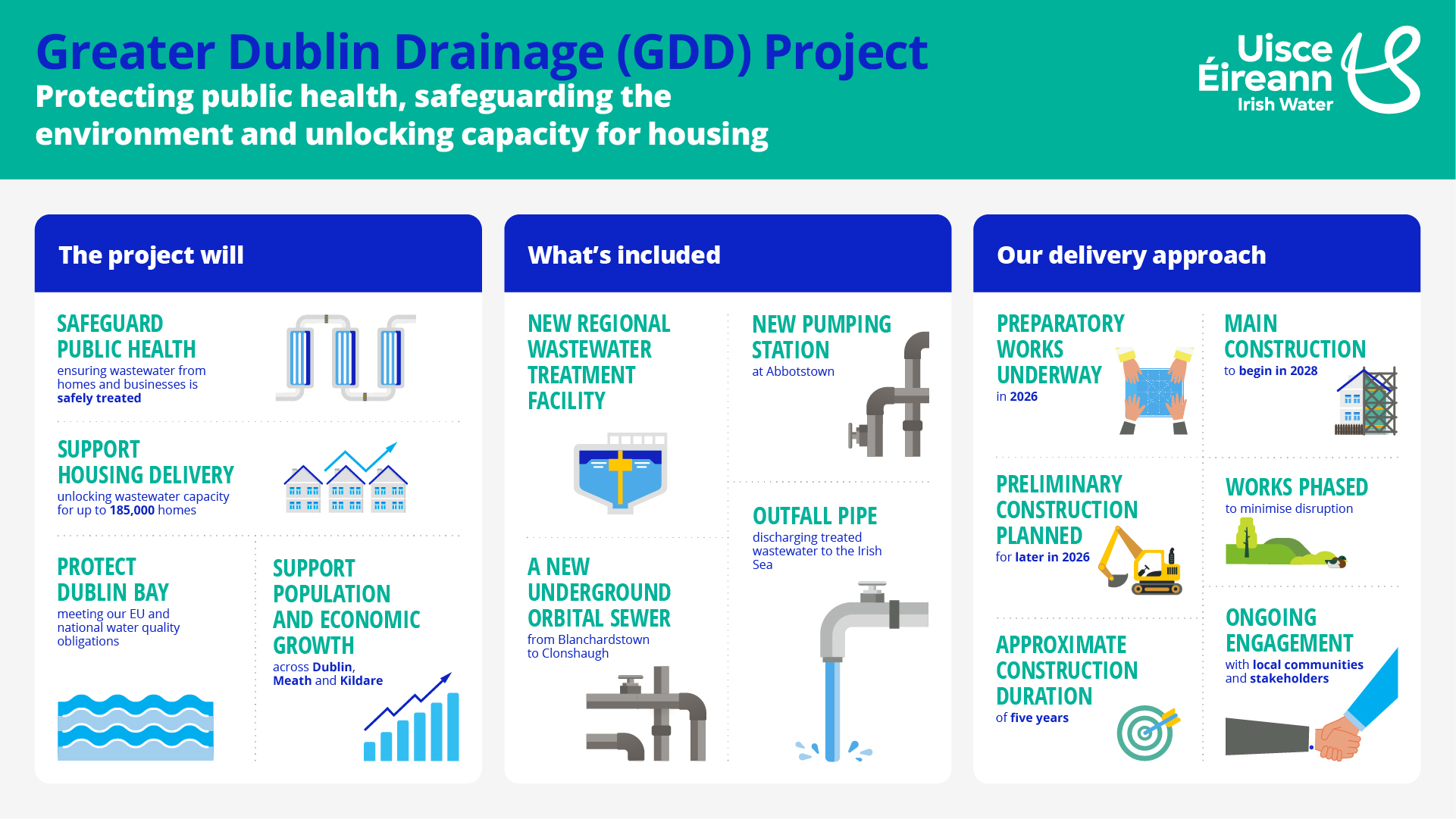
The Greater Dublin Drainage (GDD) Project is one of the largest and most critical wastewater infrastructure projects in Ireland’s history. It will protect public health, safeguard our environment, and support sustainable growth to 2050 and beyond.
This essential national infrastructure project includes the development of a new regional wastewater treatment facility, alongside associated infrastructure, to serve north Dublin and parts of the surrounding counties of Kildare and Meath. The GDD Project was granted planning permission by An Coimisiún Pleanála in July 2025.
The Greater Dublin Drainage (GDD) project is identified under Project Ireland 2040 and the National Development Plan as essential national infrastructure to support sustainable growth and housing delivery in the Greater Dublin Area.
Uisce Éireann is moving at pace to deliver the Greater Dublin Drainage (GDD) Project. Good progress has been made on the preparatory works and procurement process, and a Wastewater Discharge Licence (WWDL) has been granted by the Environmental Protection Agency (EPA). Marine site investigations are continuing in Portmarnock Bay, and a marine barge is set to be temporarily deployed offshore. Preliminary construction works are expected to commence before the end of 2026, with the project scheduled for completion by 2031.
Once operational, GDD will provide wastewater treatment capacity for the equivalent of 500,000 people, supporting housing delivery for up to 185,000 homes, while reducing pressure on existing treatment plants and protecting coastal waters in line with national and EU environmental standards.
The Project
To meet the needs of our growing population, the GDD project solution consists of:
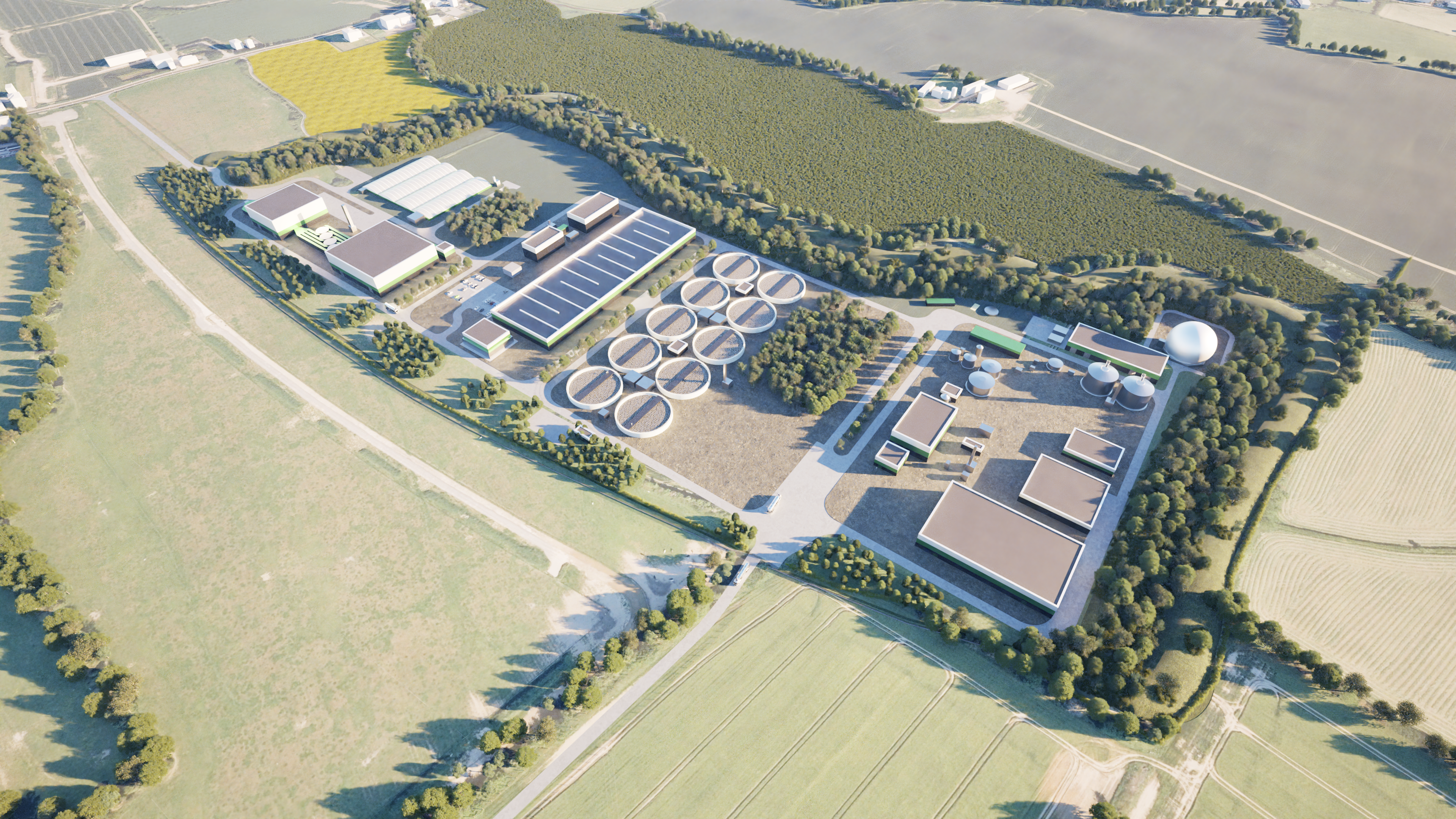
Visual of Clonshaugh WWTP
Why we need the GDD
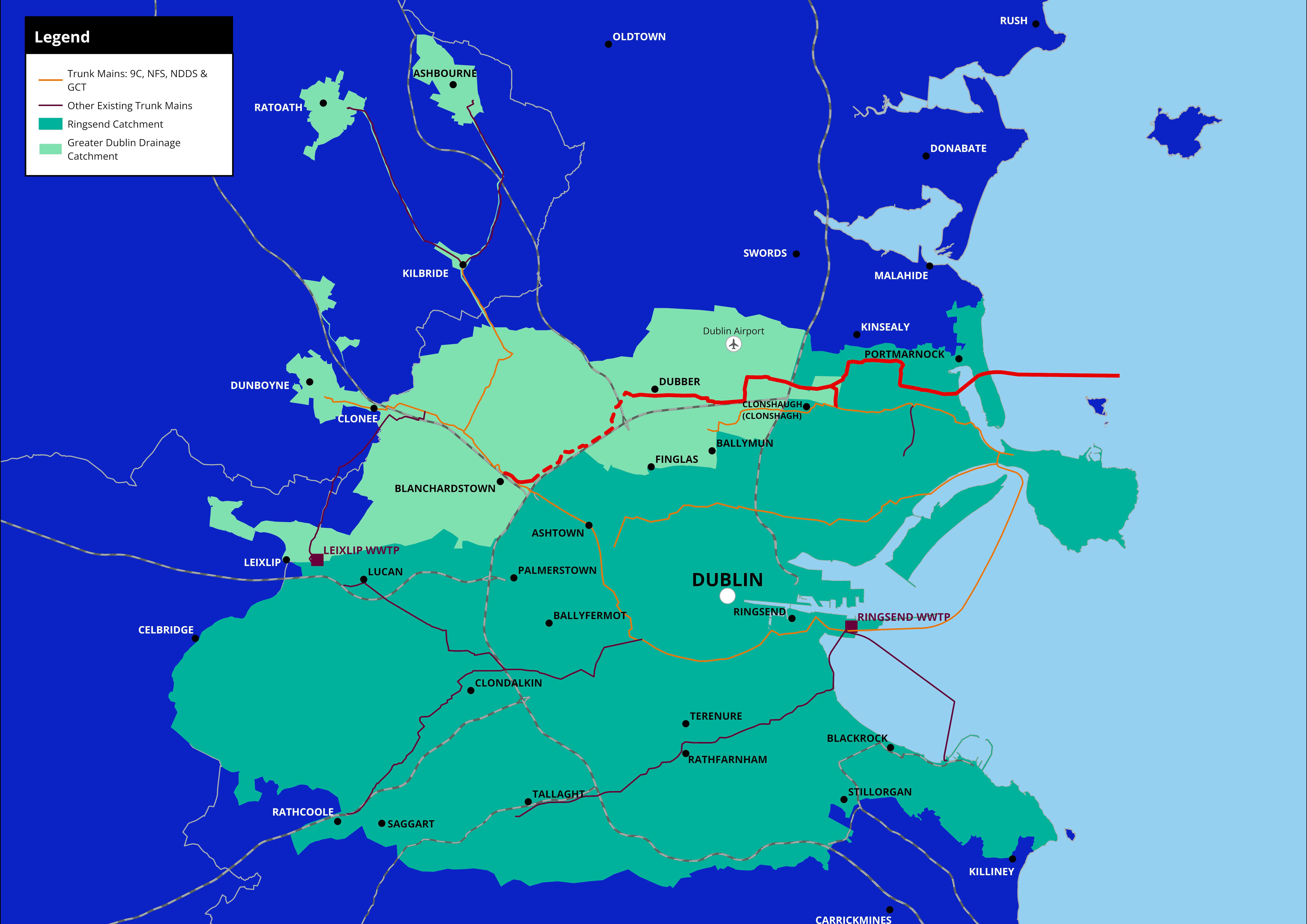
GDD will provide 500,000 PE within the Greater Dublin Area catchment. This will release critical treatment and network capacity in other parts of the Ringsend Catchment.
Project Benefits
GDD is critical to supporting needs of growing population and economy
Next Steps
Preparatory activities on the Greater Dublin Drainage Project are now underway, ahead of the preliminary construction works which are planned for later this year. Marine site investigations are continuing in Portmarnock Bay, and a marine barge is set to be temporarily deployed offshore. The main construction works for the project are due to commence in 2028, and the project is expected to be commissioned in 2031. All works will be carried out in phases to minimise disruption. Uisce Éireann has appointed a dedicated Community Liaison Officer (CLO) who will be engaging directly with impacted communities and stakeholders as the project progresses.
Further information
If you have a question or wish to register for updates on the project, please email the project team at greaterdublindrainage@water.ie.
To read the latest project newsletter click here.
For Frequently Asked Questions, click here.