
Greater Dublin Drainage Project

Uisce Éireann’s plan to unlock growth, safeguard the environment and facilitate housing in the GDA.

Project Overview

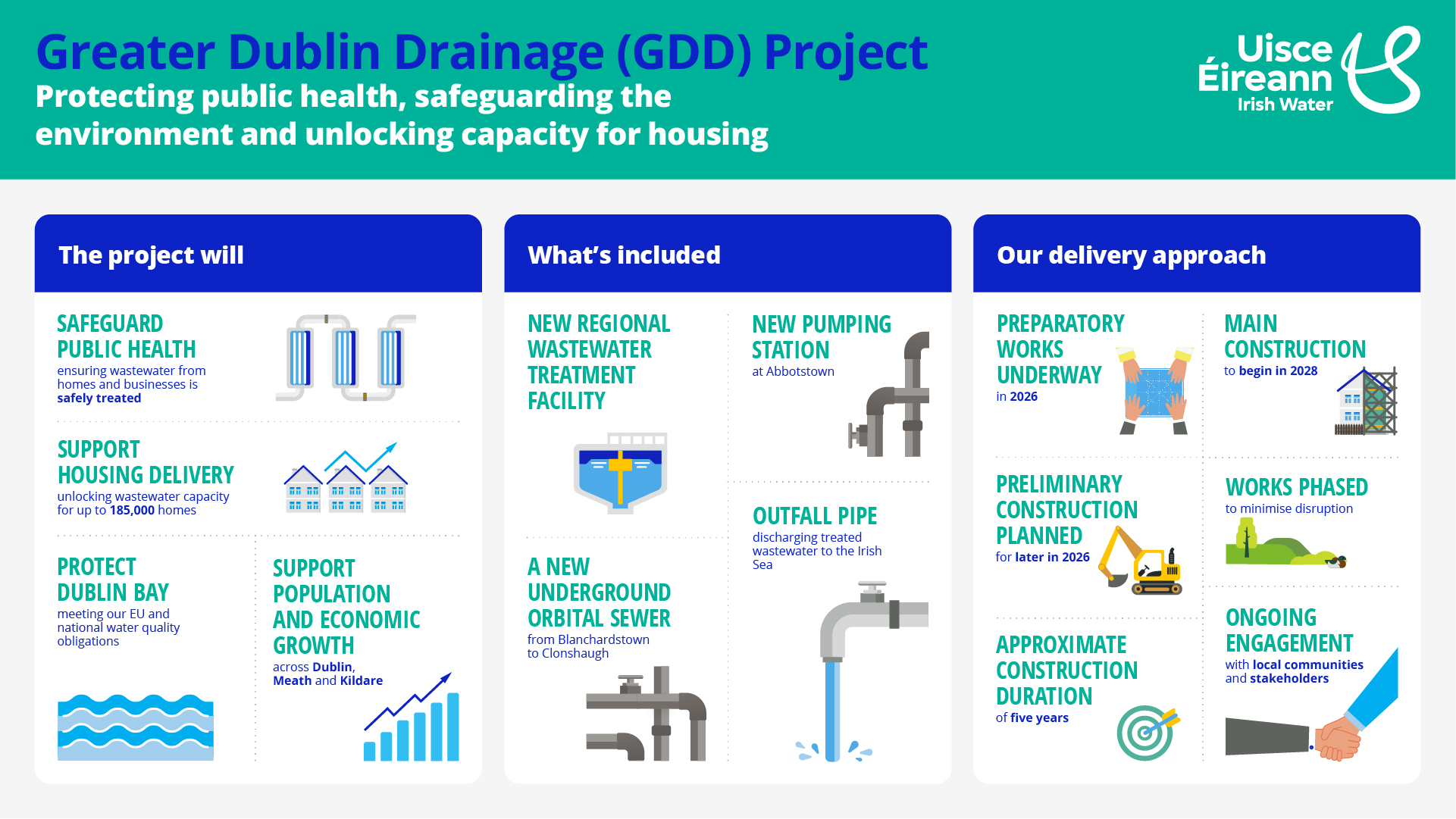
The Greater Dublin Drainage (GDD) Project is one of the largest and most critical wastewater infrastructure projects in Ireland’s history. It will protect public health, safeguard our environment, and support sustainable growth to 2050 and beyond.

Designated as critical national infrastructure under the Critical Infrastructure Act 2026, Greater Dublin Drainage will deliver wastewater treatment capacity equivalent to a population of approximately 500,000 and support the delivery of up to 185,000 new homes across north Dublin and surrounding parts of Meath and Kildare. It will also protect our coastal and marine waters and help Ireland meet national and EU environment standards.

The project includes the development of a regional wastewater treatment facility at Clonshaugh; an orbital sewer network; a pumping station; and a marine outfall to the Irish Sea.

Uisce Éireann is moving at pace to deliver the GDD project. Preliminary construction works are now in progress, and the project is scheduled for completion by 2031. Check out our Project Roadmap below for more details.

To find out more about what the project means for Greater Dublin, watch our short video below.

Location
Dublin
Status
In progress
Type
Wastewater

The Greater Dublin Drainage (GDD) Project

GDD project roadmap

Greater Dublin Drainage Project Roadmap

The Project

To meet the needs of our growing population, the GDD project solution consists of:
Icon

A new regional wastewater treatment facility and sludge hub centre on a 30 hectare site at Clonshagh (Clonshaugh)

Icon

An underground orbital sewer from Blanchardstown to Clonshagh (Clonshaugh), including a new pumping station at Abbotstown

Icon

A sewer to divert part of the North Fringe Sewer to the new treatment facility

Icon

An outfall pipe from the wastewater treatment facility discharging the treated water to the Irish Sea

Icon

A regional biosolids storage facility located at Newtown/Kilshane, Dublin 11

Greater Dublin Drainage (GDD) Project

Greater Dublin Drainage (GDD) Project

GDD Route Map Animation
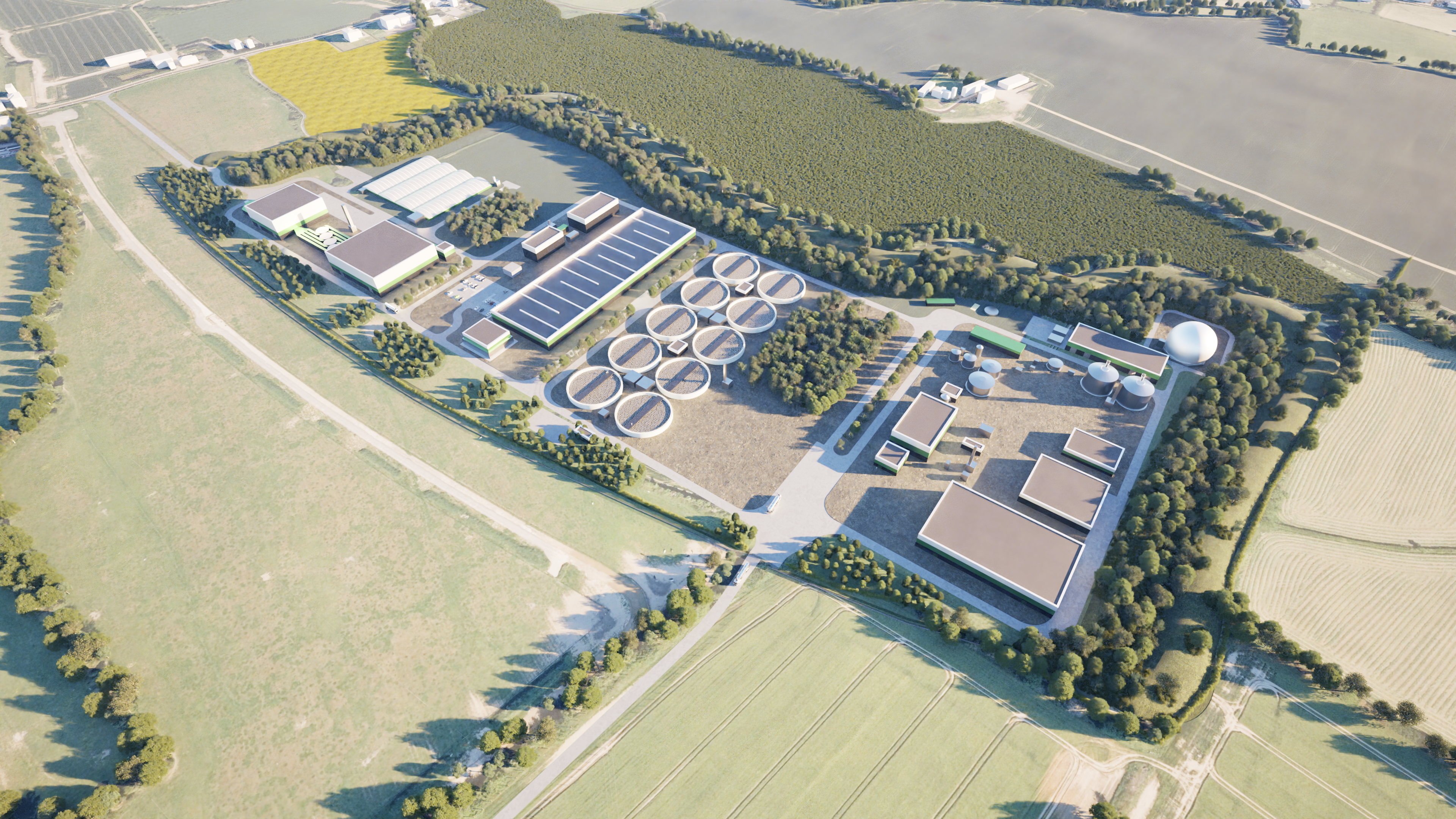
Clonshaugh WWTP Visual

Visual of Clonshaugh WWTP

Why we need the GDD
Icon

Adequate wastewater collection and treatment capacity in the Greater Dublin Area is vital to social and economic growth including provision for new housing and protecting public health and the environment.

Icon

As our population and economy grows, so too does the volume of wastewater. The amount of wastewater generated in greater Dublin is projected to increase by over 50% in the period to 2050

Icon

Record growth in the wastewater collected in the GDA Catchment.

Icon

Growth over the 2023/2024 exceeding all previous projections.

Icon

Existing treatment facilities are operating near or above capacity.

Icon

49% of all Ireland’s wastewater is treated in the GDA and 40% at Ringsend WWTP.

Icon

Volume of wastewater projected to increase by at least 20% by 2031.

Icon

Volume of wastewater in the Greater Dublin Area is projected to increase by 50% by 2050.

Icon

By 2028 Uisce Éireann will be unable to grant new connections to the wastewater network in major parts of the Greater Dublin Area.

Icon

Delays to the delivery of Greater Dublin Drainage Project will severely constrain growth and development, including housing, in the GDA, with serious consequences for current and future generations.

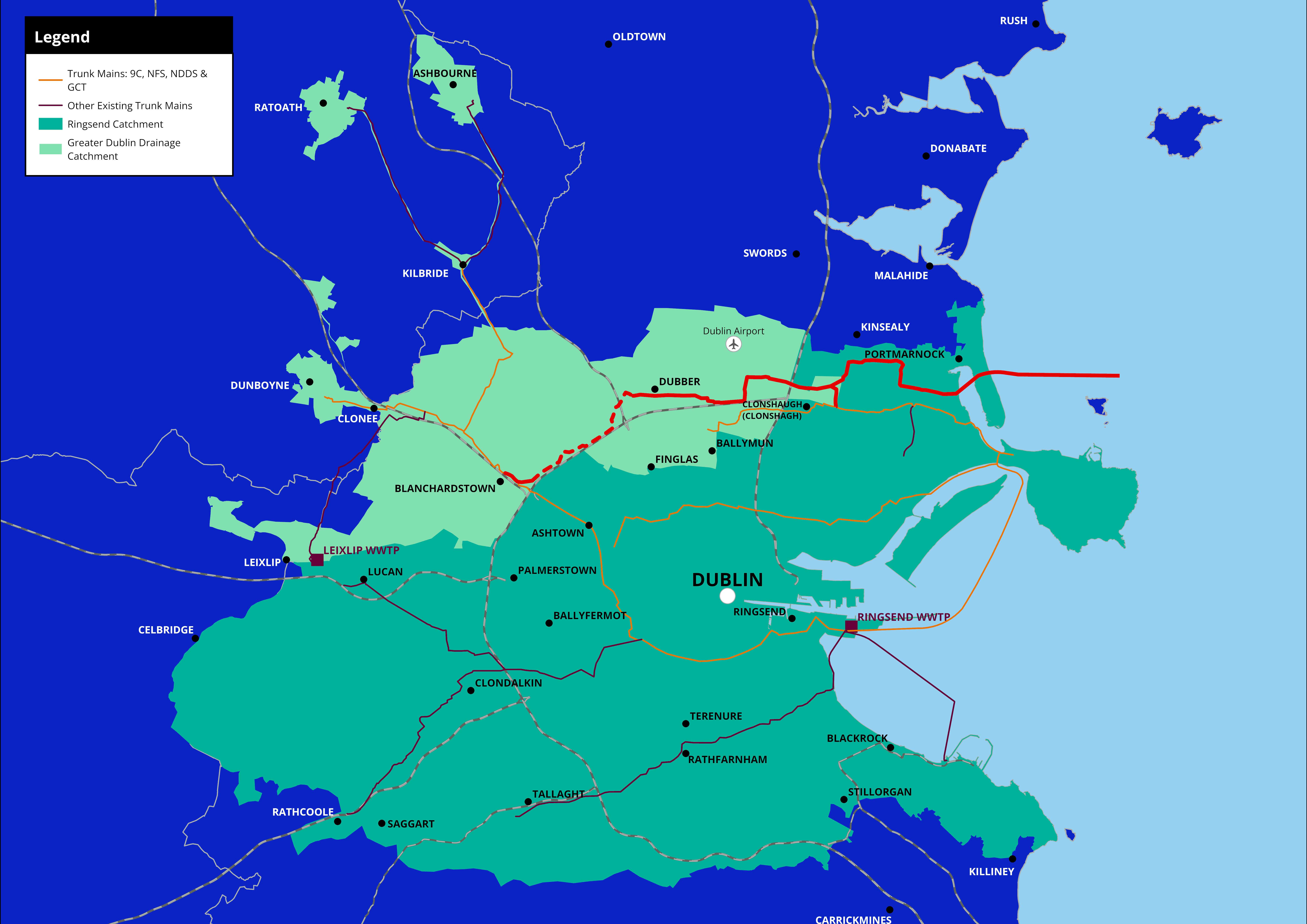
GDD catchment area infographic map

GDD will provide 500,000 PE within the Greater Dublin Area catchment. This will release critical treatment and network capacity in other parts of the Ringsend Catchment.

Project Benefits

GDD is critical to supporting needs of growing population and economy

Icon

Safeguard public health

The project is one example of Uisce Éireann’s critical ongoing work to ensure that the wastewater generated every day in our homes, schools, and workplaces continues to receive the proper treatment – safeguarding public health and enabling our communities to thrive.

Icon

Protect our environment

The project is key to unlocking the wastewater capacity constraints within the Greater Dublin Area, helping Ireland meet national and EU environmental standards by protecting our environment and ensuring cleaner water for fish, wildlife, and everyone who uses Dublin Bay.

Icon

Support the demand for new housing

Once operational, the GDD will have the capacity to provide wastewater treatment for the equivalent of half a million people living and working in this area and will support housing delivery for up to approximately 185,000 homes.

Icon

Meet the needs of key growth areas in the Greater Dublin Area

It will provide the wastewater treatment and network capacity required in the medium and long term in areas including Leixlip, Blanchardstown, Clonee, Dunboyne, Ashbourne, and Ratoath.

Icon

Enable economic growth

Delivery of water and wastewater infrastructure and services underpin Project Ireland 2040 and are the backbone to supporting sustainable development and economic growth.

Next Steps

Preliminary works on the Greater Dublin Drainage Project are now underway, ahead of main construction works which are planned for 2028. Marine site investigations are continuing in Portmarnock Bay where a marine barge is temporarily deployed offshore. The project is expected to be commissioned in 2031.

All works will be carried out in phases to minimise disruption. Uisce Éireann has appointed a dedicated Community Liaison Officer (CLO) who will be engaging directly with impacted communities and stakeholders as the project progresses.
Project Ireland 2040 graphic

Further information

If you have a question or wish to register for updates on the project, please email the project team at greaterdublindrainage@water.ie.

To read the latest project newsletter click here.

For Frequently Asked Questions, click here.

Quick Links